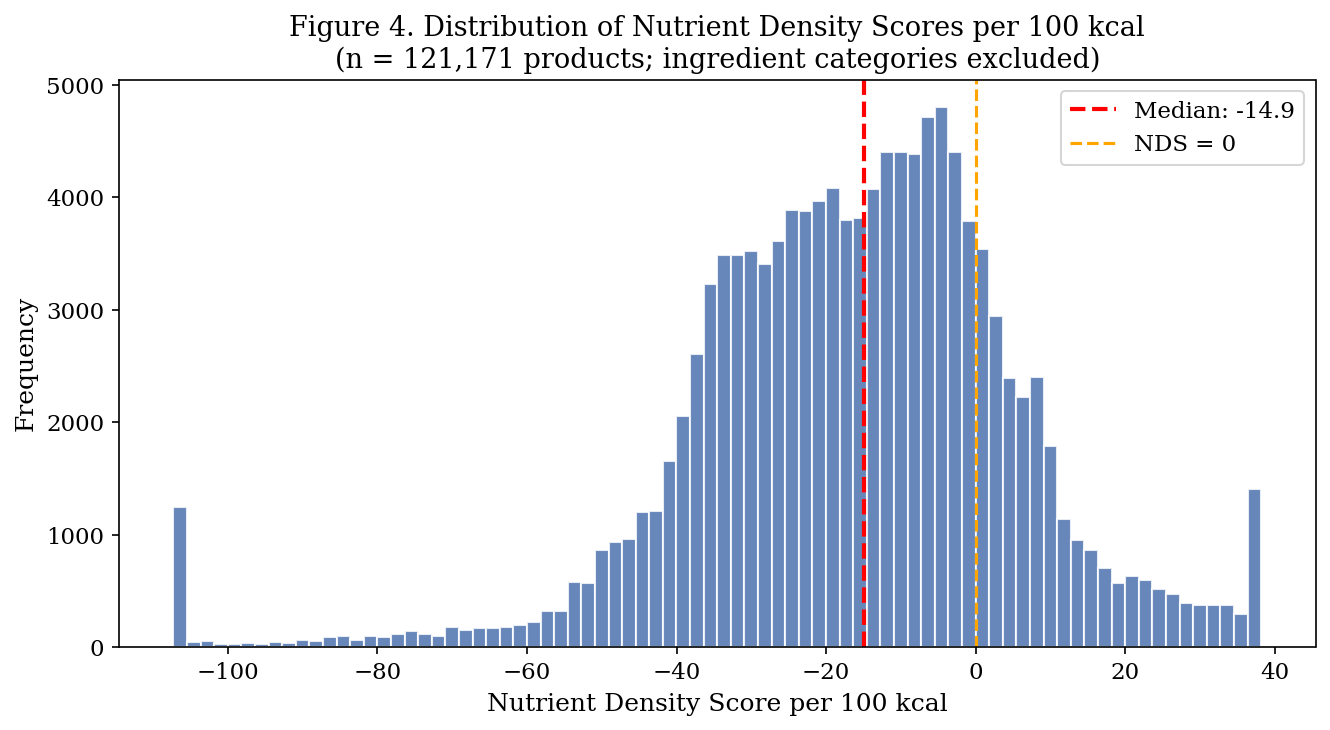
Nearly 80% of branded foods score negative.
You get a product-level nutrition score for USDA branded foods. Shoppers compare what matters at the grocery store: protein, fiber, sodium, saturated fat, and sugar per 100 calories.
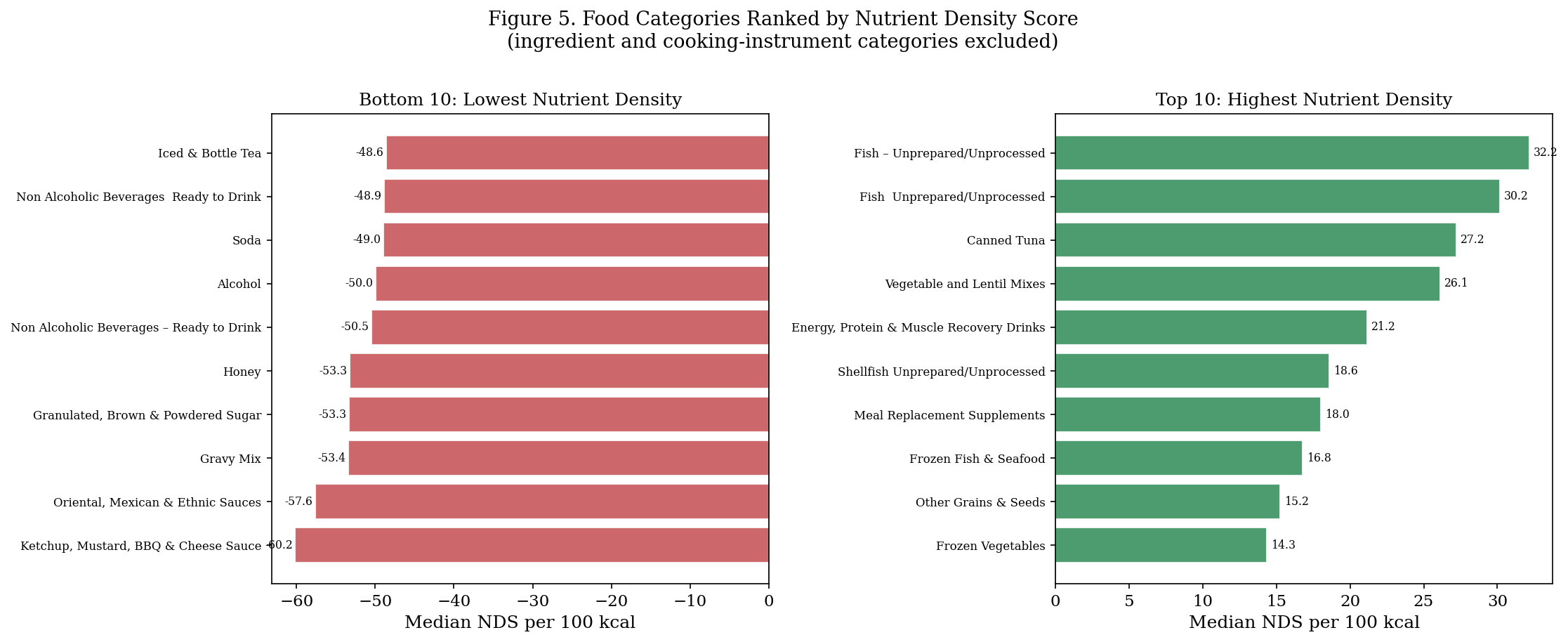
Fish, seafood, canned tuna, and vegetable-lentil mixes win on protein per calorie with little sugar. Sauces, soda, honey, and sugar lose because calories arrive with little nutritional upside.
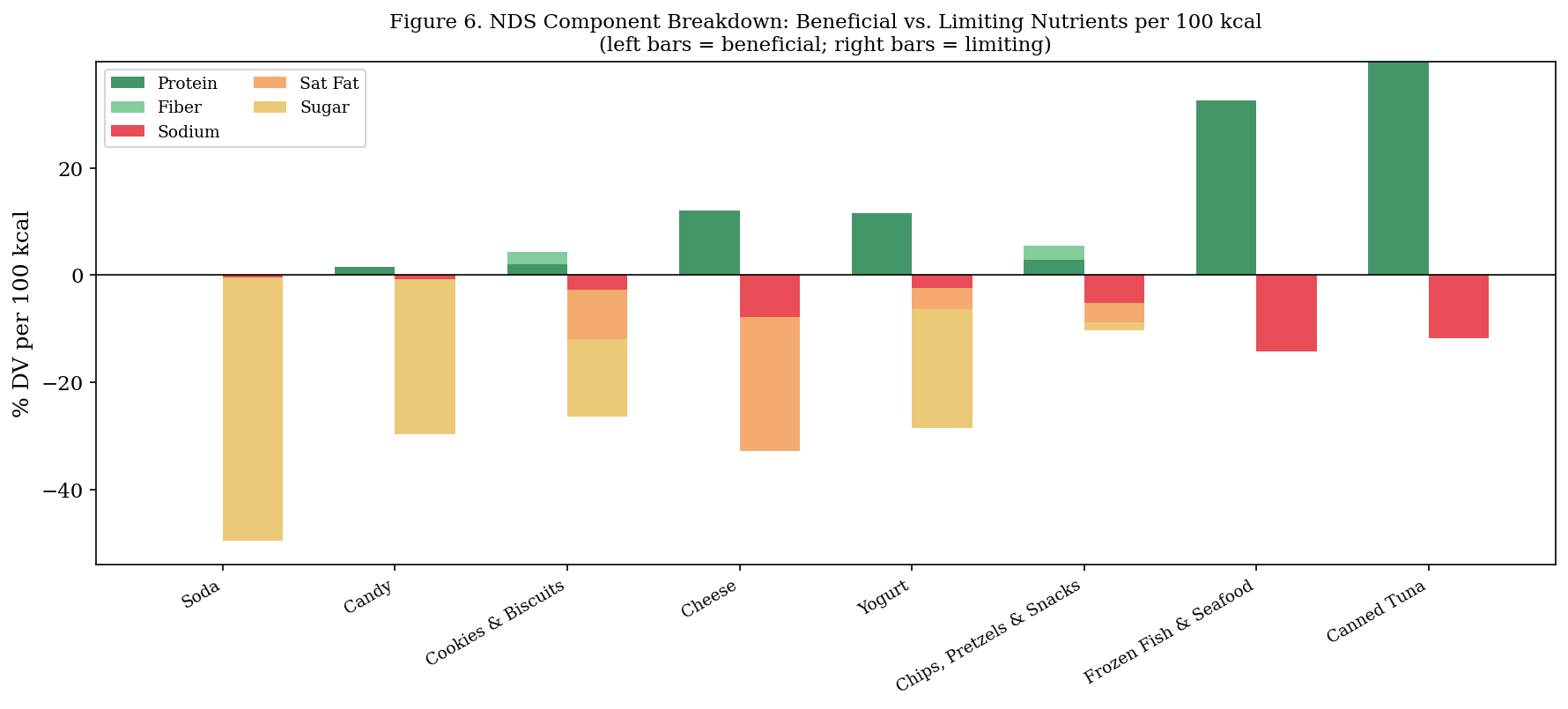
Soda lands negative almost entirely on sugar. Cheese has protein, but sodium and saturated fat pull the score down. Tuna wins on high protein with low penalties.
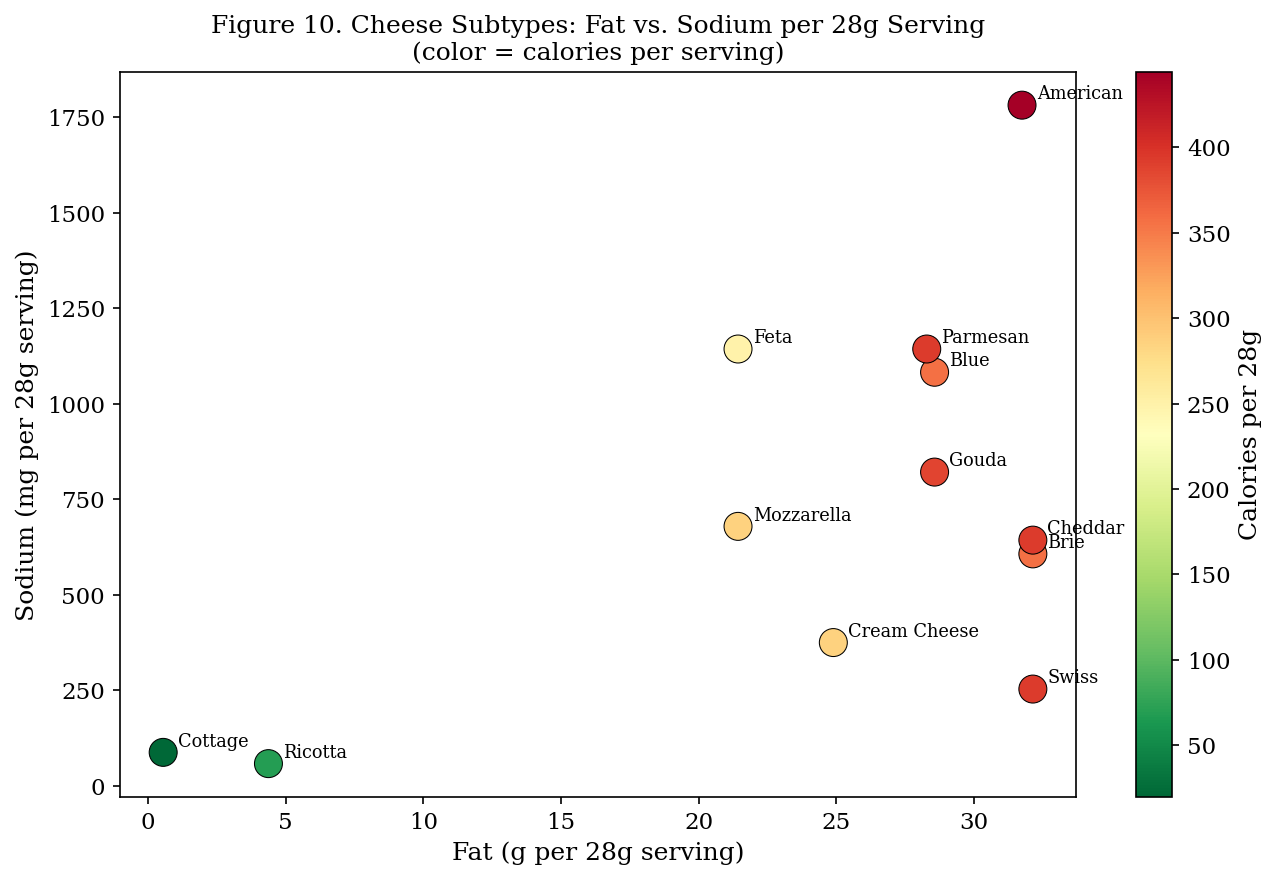
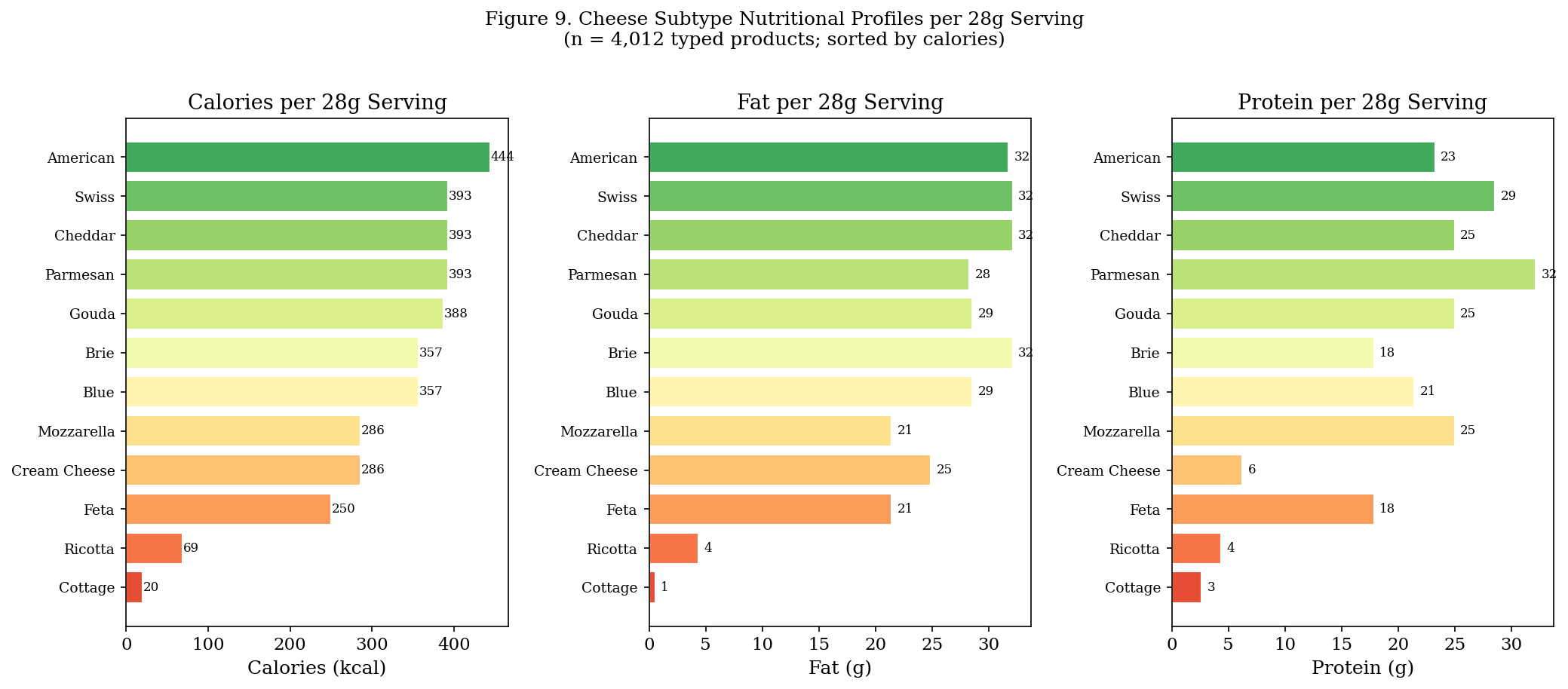
Swiss and American cheese share calorie and fat profiles. Sodium changes by about sevenfold.
Cheddar, Swiss, Gouda, Blue, and Brie cluster around 28 to 32g of fat. For protein with less fat, mozzarella is a stronger pick than a swap between hard cheeses.
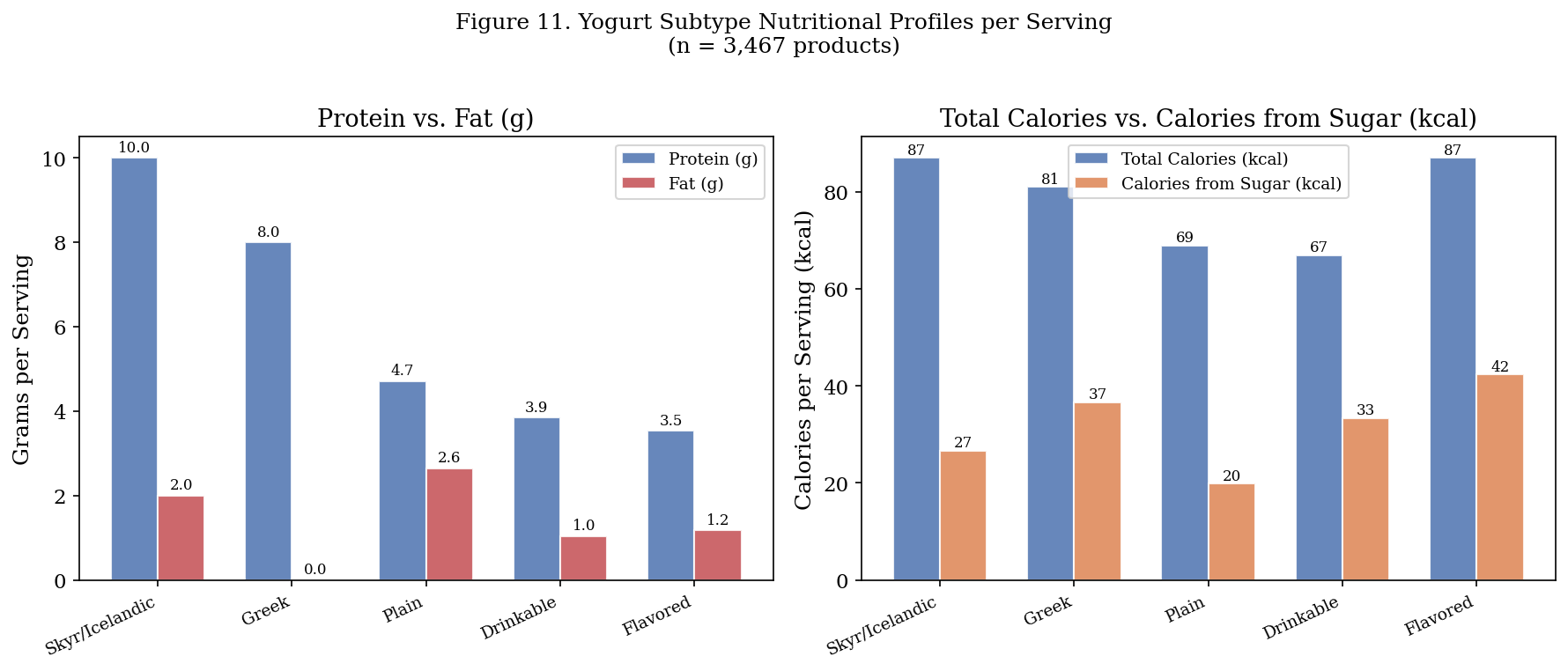
Greek yogurt brings 8g of protein, but 37 of 81 calories come from sugar in the median product. Plain and Skyr are more reliable low-sugar cues than the Greek label alone.
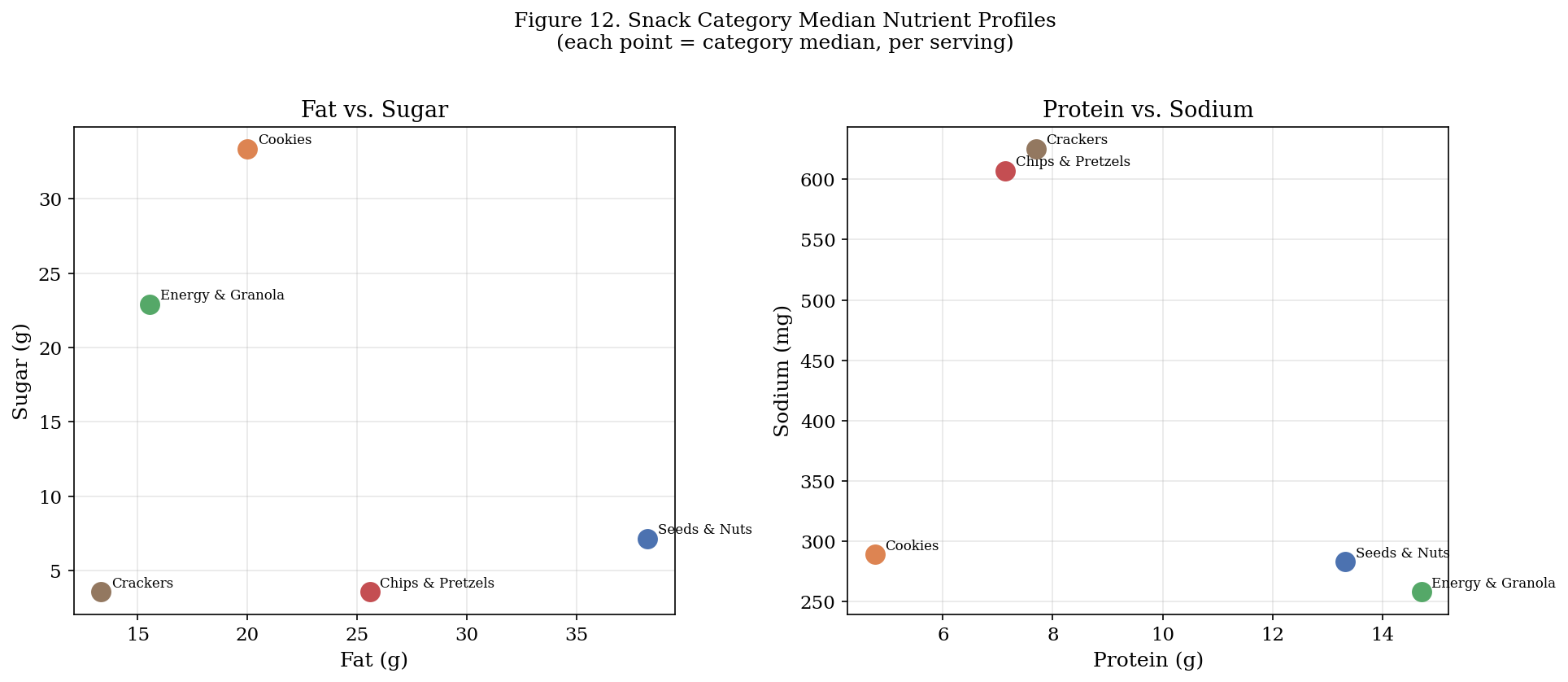
Seeds and nuts pack calories, and they also lead snacks on protein with lower sodium than chips, pretzels, and crackers.
NDS flags products where sugar, sodium, and saturated fat outweigh protein and fiber.
Swiss vs. American matters more than cheese vs. no cheese on sodium load.
Greek yogurt stays sugar-heavy when most products on the shelf are flavored.
Seeds and nuts bring calories, and they bring protein and lower sodium with them.
The front of the package loses pull once every product receives the same score.
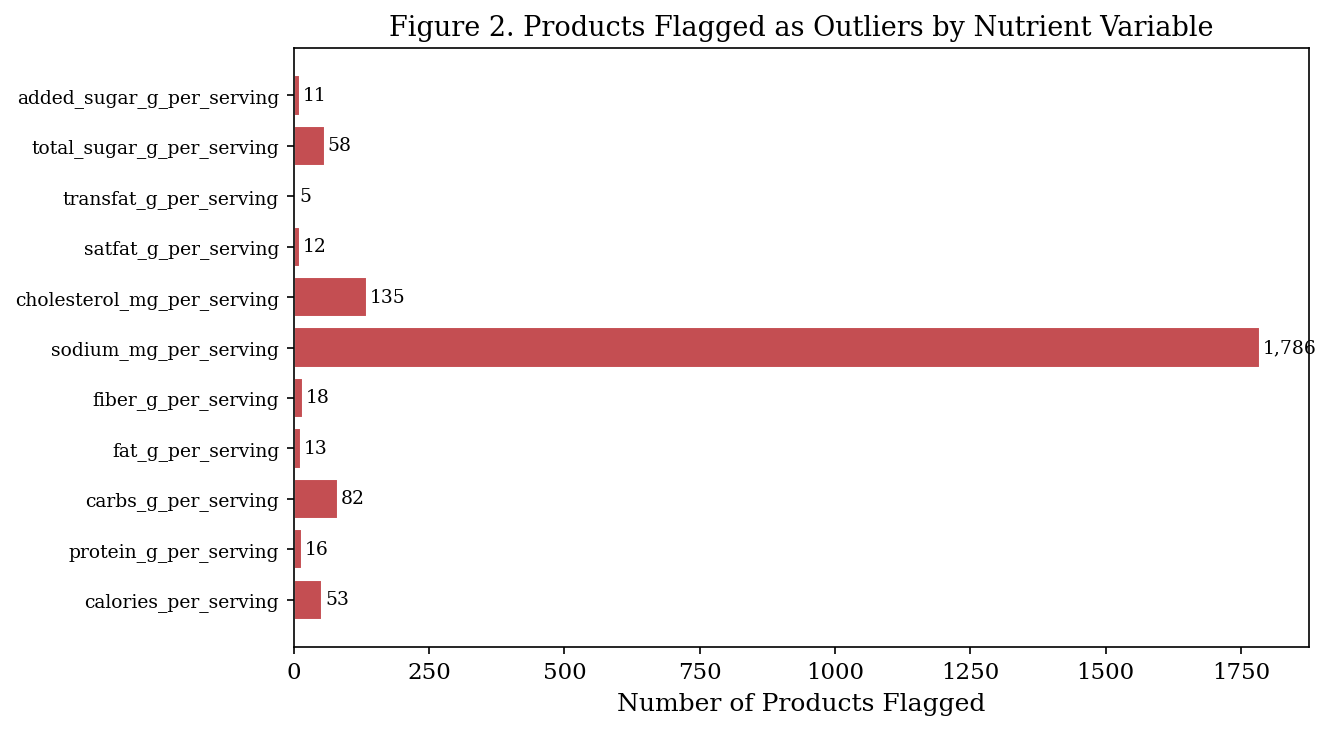
Only 0.11% of nutrient values flagged as outliers. Sodium accounted for 82% of them. Cleaning lowered the sodium mean by 72% while the median barely moved.
Added sugar is missing for 69.6% of products. Total sugar over-penalizes dairy and fruit.
Protein, fiber, sodium, saturated fat, and sugar carry equal weight. Better weights would use outcome data or expert input.
Calcium, iron, vitamin D, and other nutrients sit outside the score for now.
Turn the score into a searchable product lookup. Shoppers compare options by category in seconds.